The Steps
I always took the ramp. It added maybe fifty or sixty feet to the walk, but that's the way I always went. That day, I took the steps instead. Four, maybe five of them, up to the front door of the church I pastored.
At the top step, my right leg gave out.
I fell about five feet, back first onto the concrete, and hit my head on the bumper of a parked car. Lying there, the first thing I thought was, why didn't I just go over to the ramp?
My wife was standing over me, asking if I was okay. I asked her if my legs were moving. She said yes. I couldn't feel a thing. I had landed so hard that numbness ran through my whole lower body. My legs were moving, and I didn't even know it.
That was 2014. I didn't know it yet, but that question would follow me for the next ten years.
Up to then, my body had never let me down. In high school I realized God had given me a gift to play football: big, strong, and able to move. It took me to Texas Tech on a full scholarship, where I was a three-year starter and a team captain. Then it carried me into coaching, and into the pulpit, where I was the preacher who ran around the church. At home, I could move almost our whole house by myself. I'd get behind the lawnmower and cut the grass without a second thought.
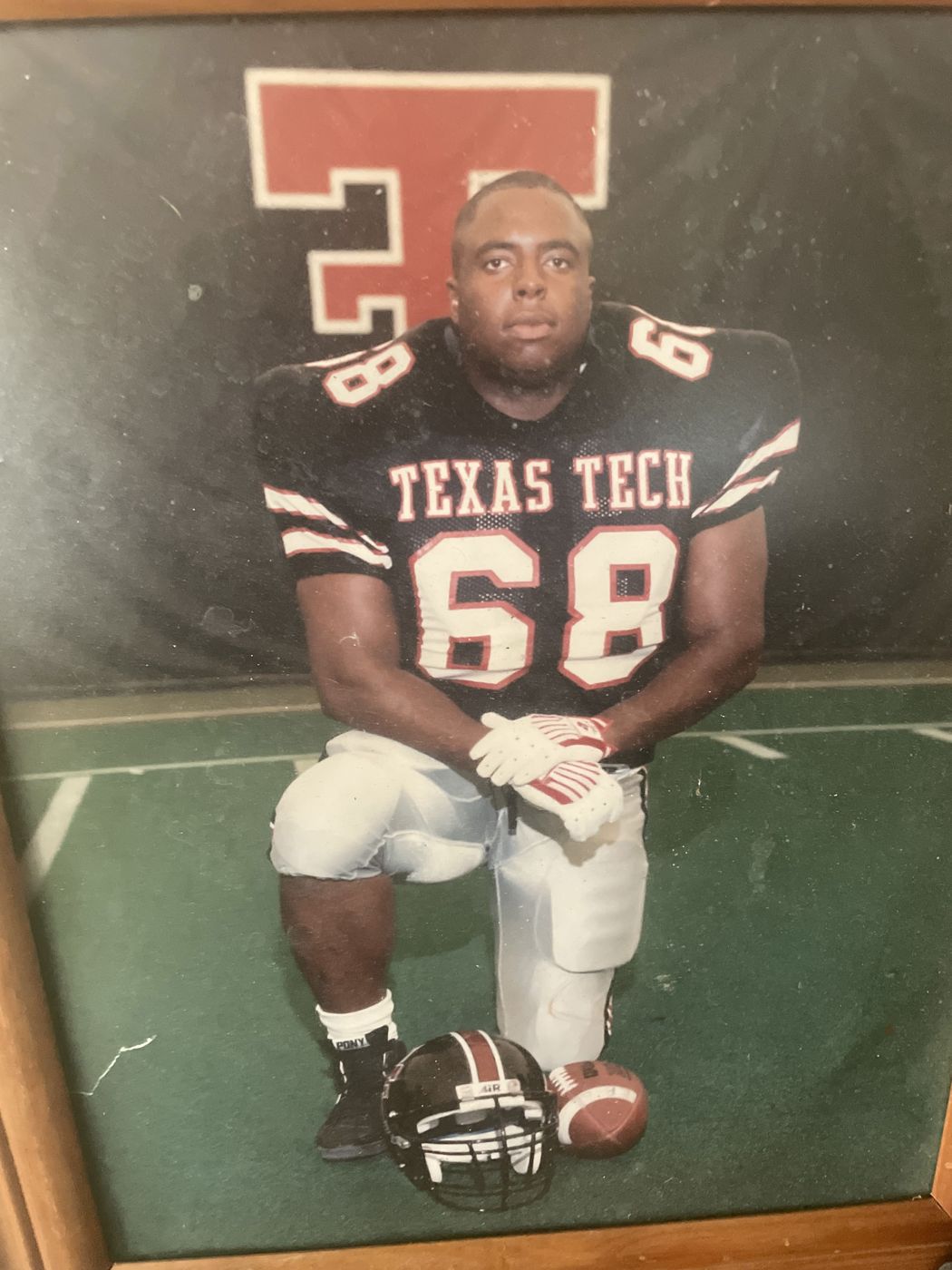
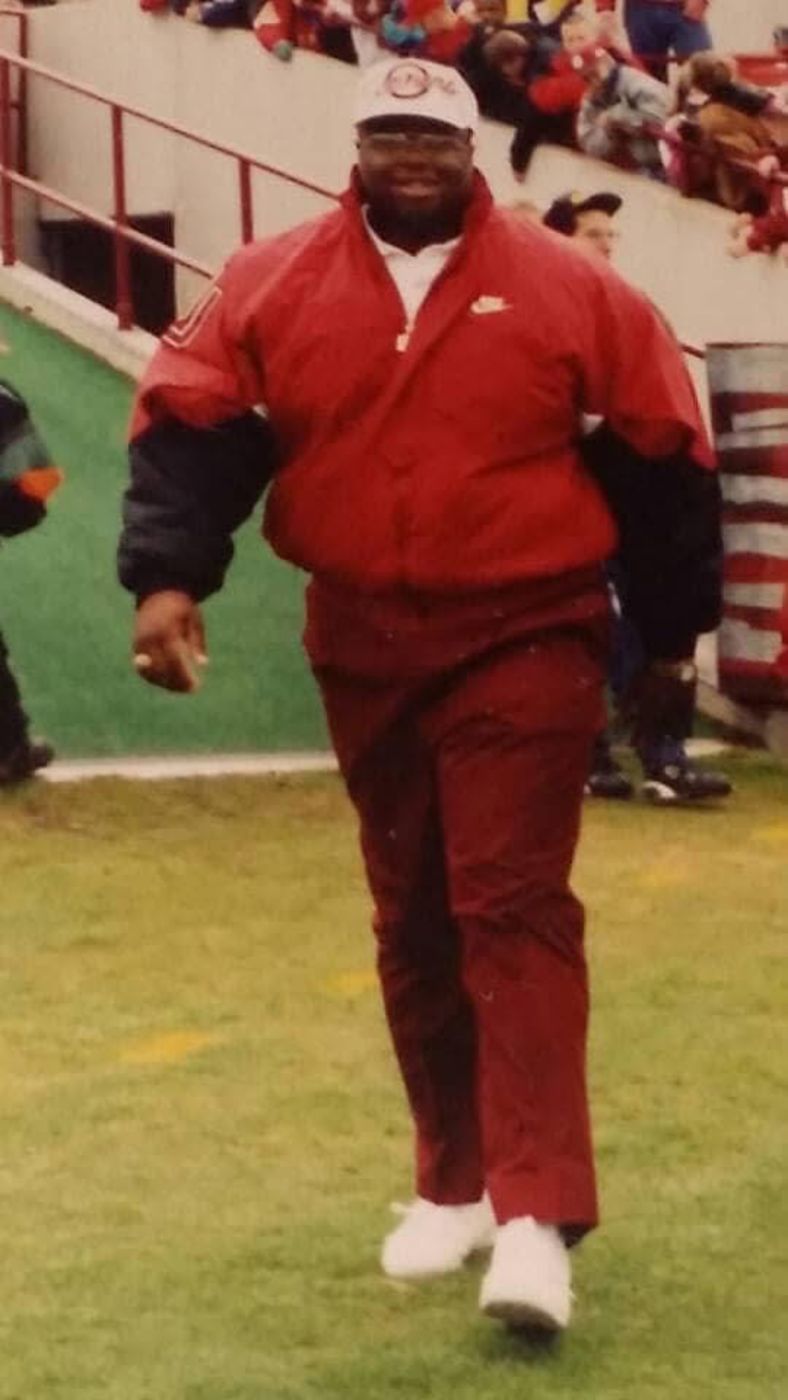
After the fall, my right leg kept getting weaker. I had a surgery. It didn't work. I fell more often, so I started using a walker. In 2018 I had a second surgery. It didn't work either.
I was still trying to be the guy. One day we were moving, and I was carrying boxes out of the house when my leg gave out again. I ended up laid out on the front porch with the boxes all around me, until my niece came out the door and found me.
For the next few years I lived on that walker. Chiropractors. Injections. Everything people encouraged me to try. After two or three years of it, I had to admit it wasn't getting any better.
7:32
By 2022 my back had started to curve. The doctor didn't want to just fuse my lower back. He wanted to correct the whole curvature of my spine. I'm a teacher, and school was about to start, so we put the surgery off a year. I told him I'd use that year to lose weight. I was around 403 pounds. By the next summer I'd lost about 98.
On May 3, 2023, I walked into Baylor on my walker. I was hoping for pain relief first. Then I was hoping to get off the walker and back to stable, normal mobility. They told me the surgery would take six or seven hours.
When I woke up from the anesthesia, the first thing I saw was the clock on the wall. It said 7:32. I remember it like yesterday. I asked the nurse if the surgery was over already, because it had started at 7 o'clock that morning.
It was 7:32 in the evening.
I'd been on the table for twelve and a half hours.
Then the surgeon came into recovery and told me to move my legs. I could feel them a little. I couldn't move them.
They rushed me to the MRI, then the CAT scan, to make sure none of the screws and plates in my back were pressing on a nerve. Everything was exactly where it was supposed to be. It was just how my body had responded to all that spinal cord manipulation.
I spent about 12 days in the ICU, and I was out of it the whole time. When they finally moved me to a regular recovery floor, I sat in that room and it hit me. This was going to be a long road before I was back to normal, or anywhere close.
Home
The day I was released to inpatient rehab, it took three or four people to roll me off the stretcher and onto the bed. I had never felt pain like that. I yelled out.
One of the ladies there, Charlene, stood over me and rubbed my face with a cold towel. She kept telling me it was going to get better. It was going to be okay. God's got you.
When I finally came home, I was so afraid of falling that I wouldn't move from my chair to anywhere else by myself. So I waited for my boys. They helped me into bed at night and out of bed in the morning. They helped me in the restroom and helped me get dressed. All the things I taught them how to do as kids, they were now doing for me. They were putting their own lives on hold to take care of me, and I was embarrassed.
One night my middle son, Caleb, was out on a date, and he was about to leave it to come home and put me in bed. I sat there and told myself, Chuck, you just gotta get in the bed. It wasn't pretty, but I got in. Then I texted him: You don't have to come home. From there, it got better and better.
My wife carries the most. The man she's married to now can't do what he used to do, so she's no longer just my wife. She's my caregiver. She helps me dress. She helps with my hygiene. She puts my shoes on my feet. And she still loves me and honors me as a man, as her husband, and as the father of our kids. I pray God gives her rest. I hope that every bit of independence I gain takes some weight off of her.
This didn't just happen to me. It changed my whole family, physically, mentally, emotionally, and spiritually.
It changed how I go anywhere, too. I used to just go: see a friend, grab dinner, catch a game. Now I have to think first. Can I get in? Is there room for my wheelchair? I keep a set of ramps in my car now. When my old teammates got together at a buddy's house to watch football, he FaceTimed me ahead of time to walk me through where to park and how to get my chair around to the back porch.
It started with me skipping a ramp. Now I don't go anywhere without one.
And there's a question I don't say out loud, because it invites pity. It's in my head every other day, if not every day: What if I had never done the surgery? I wish I could unring this bell. I wish I had just stayed on the walker and kept living like that.
The Work
When those thoughts come, I go back to what football taught me.
In fifth grade, my first year playing, I quit. It was August in Houston, I was a chubby kid, and the heat got to me. I stopped going to practice and didn't tell my father for three days. When he found out, he told me I didn't have to play after that year, but he couldn't let me quit. If you quit, he said, you'll start quitting for the rest of your life. He worked overnight, so after that he'd drive me to practice and sleep in the car until it was over. That season our team made it to the league's Super Bowl, and I was the MVP. I fell in love with the game, and with the toughness it pulled out of me.
That's the toughness I need now.
The surgery left me an incomplete paraplegic. I still have feeling in my legs. I still have movement. The work is reconnecting my brain to my muscles, and that's what I do at REACT Neuro Rehab in Addison. It takes neuroscience and combines it with strength and conditioning.
Every session starts with stretching and pressure-point work. Then they put me in positions I haven't been in since the surgery. They're counting on me to push myself to the limit, every day, and that takes everything I have mentally and emotionally. A win is showing up with that mindset and taking on the challenge in front of me.
And it's working. When I started, I couldn't move from my chair to anywhere else on my own. Now I can. In and out of bed by myself. On and off the toilet by myself. Some of my own washing and hygiene. REACT gave me the strength, the technique, and the confidence to do it.
But REACT isn't inside a hospital, so my insurance won't pay for it. I filed every appeal and made every case I could. They said no.
I was devastated. I'm not someone who wants to sit around and mope, and I'm not trying to take advantage of anything. I'm willing to put in the work to become as independent as I can be. I just can't afford it on my own.
Standing
I see it often in my mind. The first time I stand and walk again, I'll probably be at home in my bedroom, with my family there to see what God has done. And then I see myself walking into a pulpit to preach. Not sitting in a chair. Not on a stool. Standing behind the pulpit.
But the first things I want to do on my own two feet are simple. Pull up my own pants. Put on my own socks and shoes. You don't know how humbling it is when you can't. I just want to dress myself again.
So here's what I want you to know if you stand with me. I'm a fighter. I'm up for this, and I'm going to go the extra yard to make sure what you give isn't wasted. I'll put in the work and be a good steward of every dollar.
Please keep praying that God gives me the confidence for what's in front of me, and that I can be a blessing to other people living with disabilities. I want to show them not to quit and not to give up. I see this rehab, this restoration, as a ministry.
Since 1990, when God reminded me that I'm His child, my faith has been the bedrock of my life. It's what I hold on to when the what ifs come. The verse that carries me is Philippians 4:13:
I can do all things [which He has called me to do] through Him who strengthens and empowers me [to fulfill His purpose—I am self-sufficient in Christ's sufficiency; I am ready for anything and equal to anything through Him who infuses me with inner strength and confident peace.]
Philippians 4:13 (AMP)
I encourage myself in the Lord. I get out of bed, and I go be the best version of who I am, from this chair, until the day I'm standing.
Stand with Charlie.
Goal 1 is $12,000 for three months of training at REACT. $0 raised so far.